As we step into the new year, we reflect on the achievements of the Europe PMC team in 2025. Celebrating key developments shaped by user feedback, implementation of cutting-edge AI solutions, and continued commitment to supporting open science. This past year, our work focused on making complex searches easier and improving the transparency, discovery, and reuse of open research outputs.
Powerful search, made simple
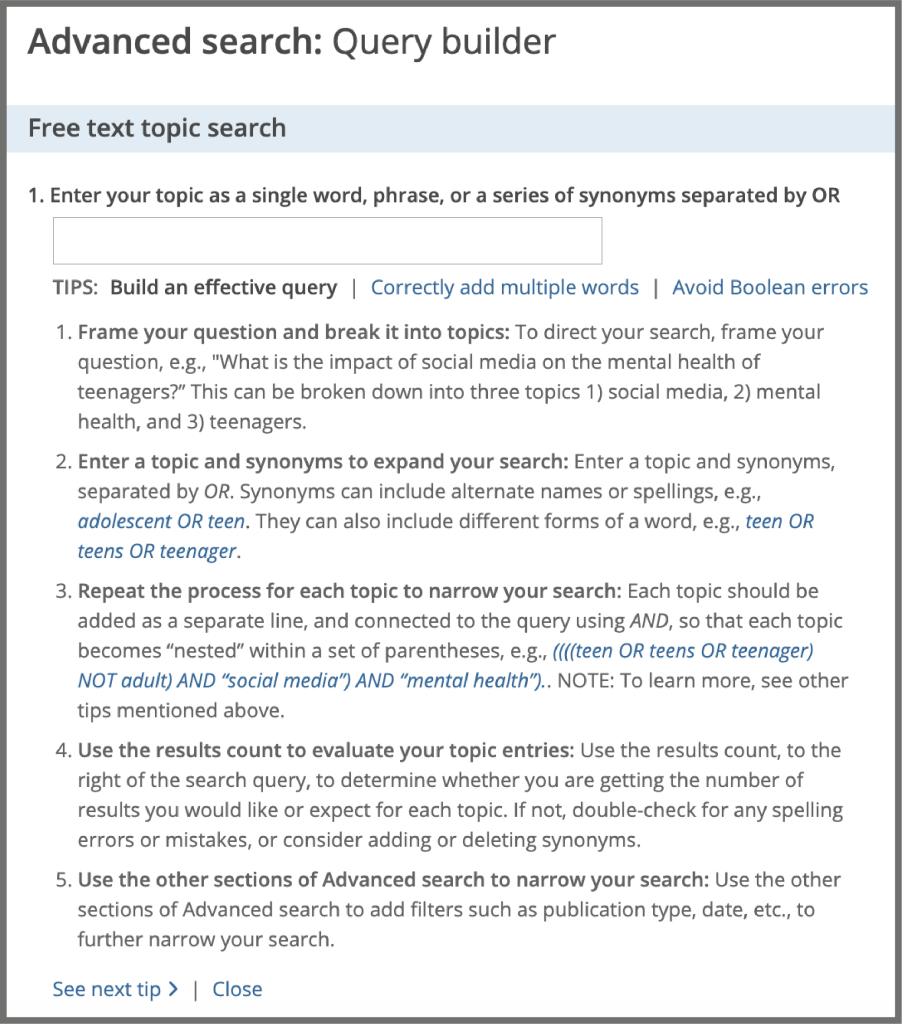
User research revealed a common desire to utilise the Advanced search to create complex queries, with users reporting that the tool was powerful but some features were not as intuitive as they could be, making it challenging to effectively harness its full capacity. In response, we completely redesigned the Advanced search into an intuitive query builder, enabling users to construct powerful and efficient searches with greater ease. To demonstrate how to integrate the Advanced search into search strategies, we offer a webinar showcasing the new features and demonstrating how expert searcher Kate Nyhan uses the Advanced search for systematic reviews and evidence synthesis.

Alongside this, analysis of user behaviour identified recurring user errors in applying correct logic and syntax. To better support the need to build search skills, we launched a revised search tips section that addresses these common pain points. This change resulted in fewer user errors, improved query accuracy, and provided better support for advanced searching.
User-focused design shaped by feedback
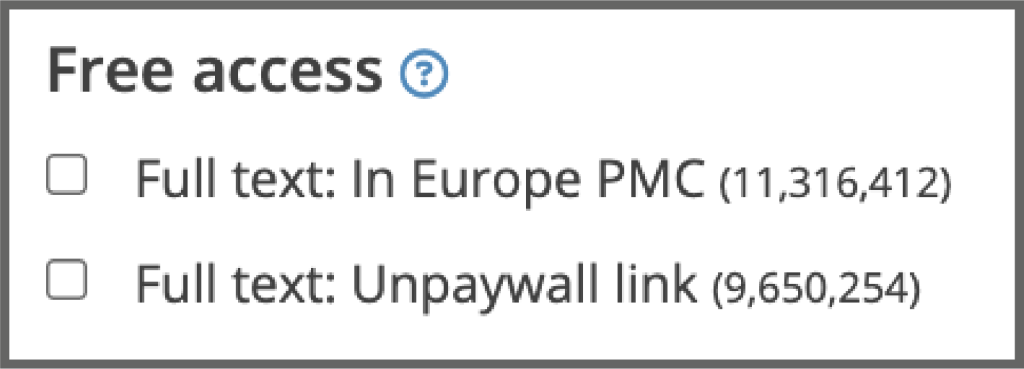
In 2023, we redesigned our filters to ease the user journey of discovering links to free full text articles not directly available in Europe PMC. Further user feedback in 2025 led us to refine the text to improve clarity to help users find free full text articles faster and with greater confidence. Before releasing the proposed text, we employed A/B testing, a method of comparing two versions of content and evaluating performance based on user engagement. This testing confirmed that the proposed text effectively supported users in finding free full text articles.
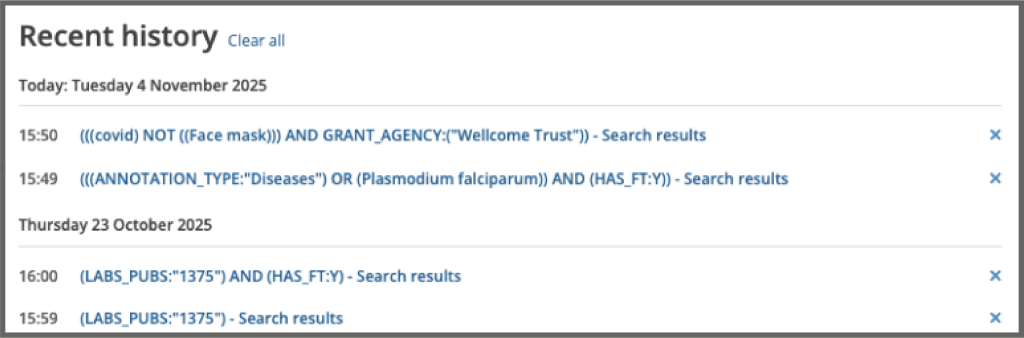
User research also identified a common behaviour, that users often perform related searches when exploring a topic and want a better way to retrace or repeat previous searches without starting from scratch. We introduced our new recent history feature to support this need, enabling efficient and seamless search workflows.
Modernising annotations with AI
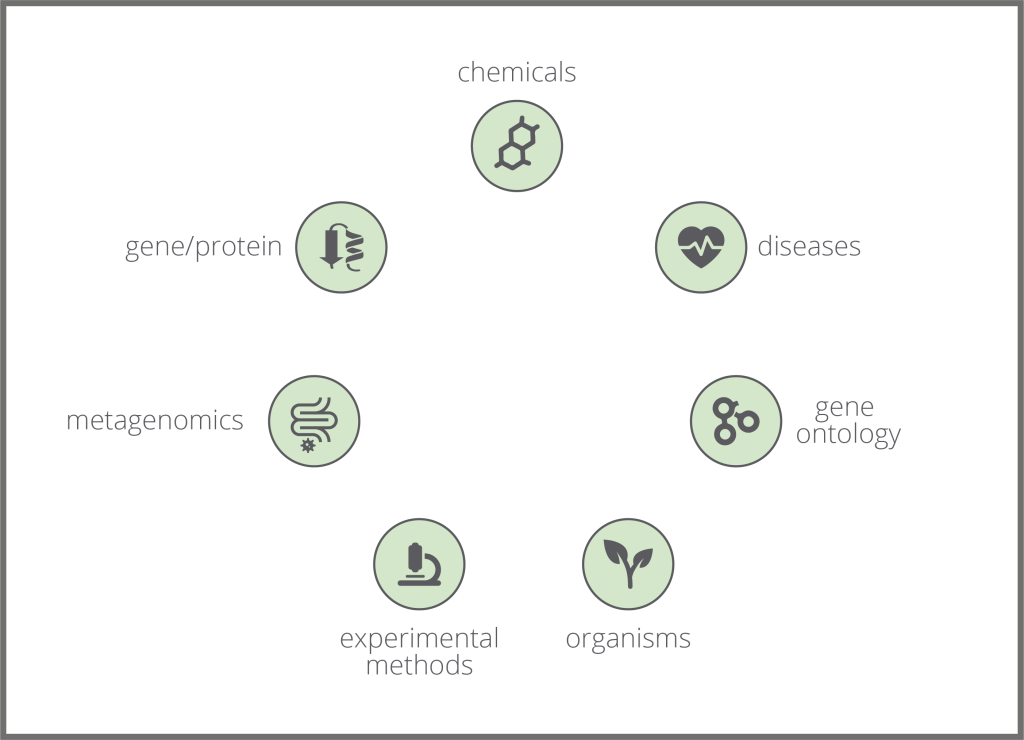
Historically, Europe PMC has implemented dictionary-based methods to identify key terms in the scientific literature, known as annotations. This method depends on predefined vocabularies and exact term matching. This approach can produce false positives and missed relevant terms, particularly as new key terminology emerges over time. To address these limitations, the majority of Europe PMC annotations are now powered by machine learning methods. Metagenomics annotations, formerly part of the EMERALD project funded by BBSRC, have also been incorporated into this live pipeline. We have enhanced the accuracy, quality, and coverage of annotations across the literature by making this change. For a full list of annotations in Europe PMC, including details on methodology, see our ‘About SciLite annotations’ page.
Supporting transparency and reproducibility of articles and preprints
We have continued to strengthen transparency and reproducibility by making research outputs easier to trace, verify, and reuse. Many journal articles contain supplementary files that contain valuable research information, including experimental details, but these files are often difficult to search, making it challenging for users to discover key information. In 2025, we extended the Europe PMC text-mining system to extract biological terms and data accessions from journal supplementary files, adding over 48.5 million new annotations. These annotations are now searchable on the Europe PMC website and available via the annotations API, enabling users to discover important details hidden in supplementary files more efficiently and facilitating reproducible research.
Europe PMC also reached a major milestone this year, with more than one million indexed preprints from 34 different servers. To further strengthen trust, visibility, and credit for preprints, Europe PMC enhanced and open-sourced our pipeline fetching citation data from Crossref by retrieving references from over six million journals and preprints not available in PubMed/PMC. This work has added more than 270 million new citations to date, including over one million citations from ~300,000 preprints. This increases the visibility and impact of preprints within the citation network as well as increasing citation coverage for many research articles.
As part of the collaborative SoFair project, Europe PMC now also makes software mentions in full text preprints available via the annotations API discoverable, improving visibility and supporting the reuse of open research software along with reinforcing preprints as first-class research outputs.
Final remarks
As we move into 2026, Europe PMC remains committed to improving discoverability, transparency, and strengthening connections across life science research literature through user-centred design and tools.
You can now find Europe PMC on Bluesky, where we share practical search tips, API guidance, free training opportunities, open science updates, and our newest tools and features. Follow us to stay connected and help shape what we build next.
To stay up to date with innovations in 2026, please look at the Europe PMC Roadmap.